SILFAS was first established in 1950 in Rivara, in the Region of Cravero and that's where it still stands today. A company whose history is entrenched in that of the land of Canavese, an area that has built up an international reputation for hot forging. SILFAS played a significant role in this development, seeing as it was one of the first hot steel forging companies in an area that is now famous for it.
It is a family-run business that has developed its skill and entrepreneurial momentum in order to be able to deal with a great many challenges. Three families have pooled their respective forces and knowledge for the benefit of the company to ensure it retained its competitive edge and could continue to satisfy its customer's needs.
During the seventy years it has been developing its business, SILFAS has successfully diversified and broadened its range of products while maintaining certain features that have helped it reach the pinnacle of its product segment. In the early days, the company mainly produced products for the agricultural sector, such as forks for gimbal and homokinetic joints. Market demands and increased levels of specialisation have recently led SILFAS to expand its product range to include reducer gears and shafts.


In quasi settant'anni di sviluppo, la SILFAS ha saputo diversificare e ampliare la gamma dei propri prodotti, pur mantenendo alcune delle peculiarità che l'hanno portata ai vertici del settore. Nei primi decenni, l'azienda ha lavorato, in principal modo, per il settore agricolo, producendo forcelle per giunti cardanici ed omocinetici. Le richieste del mercato e una sempre più aggiornata specializzazione, ha portato la SILFAS, negli ultimi anni, ad ampliare le proprie lavorazioni anche agli ingranaggi e agli alberi per riduttori.


The company constantly invests in technological innovation to keep pace with the needs of its main customers and market developments. The introduction of latest-generation CNC machinery, together with high-performance equipment, allows the production process to be optimized, ensuring high standards of reliability and quality. Production capacity is ensured by a qualified workforce working in two shifts. Continuous staff training is a central element of the company's system, with the aim of constantly improving skills and responding promptly to new challenges in the sector. Translated with DeepL.com (free version)


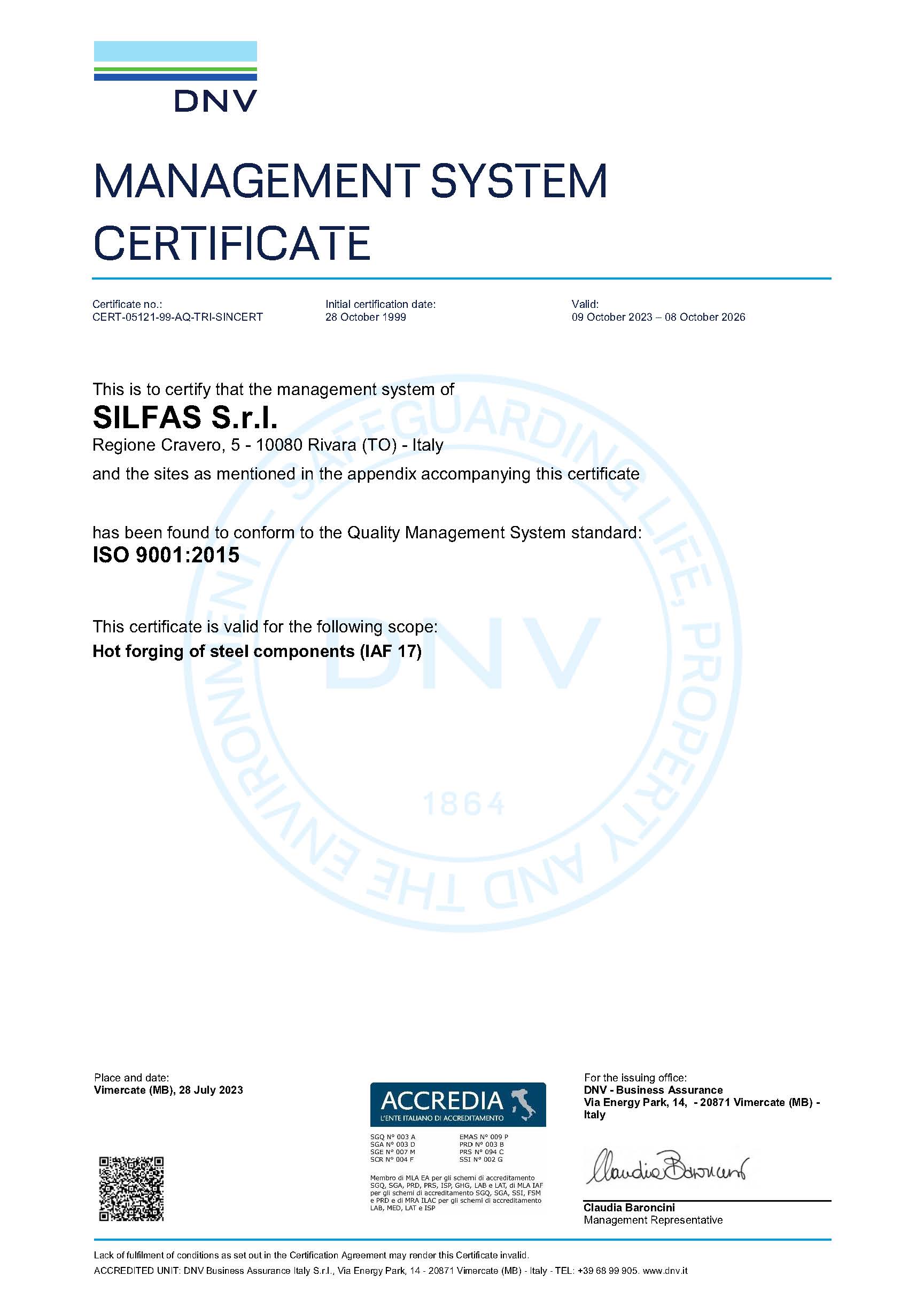
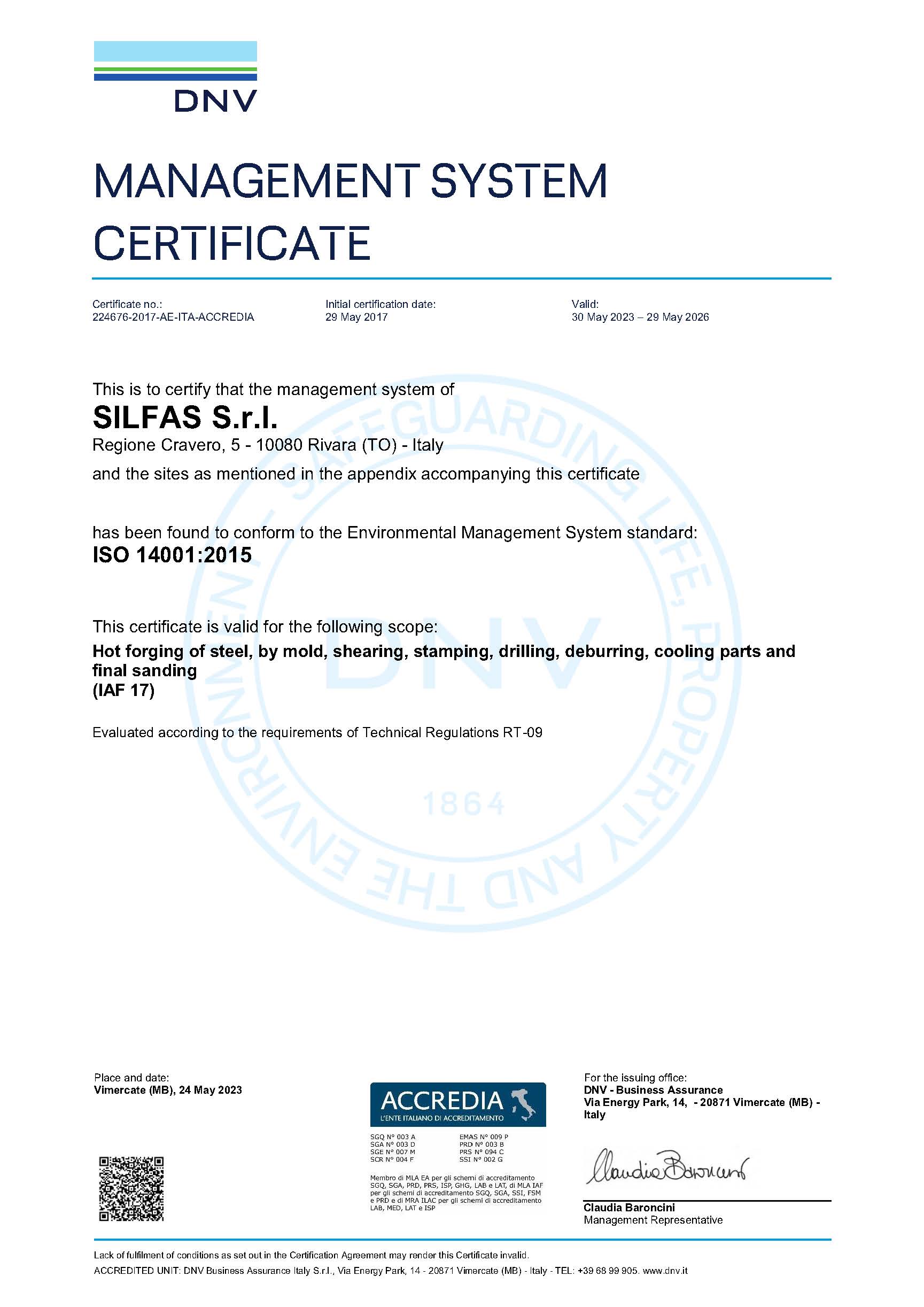
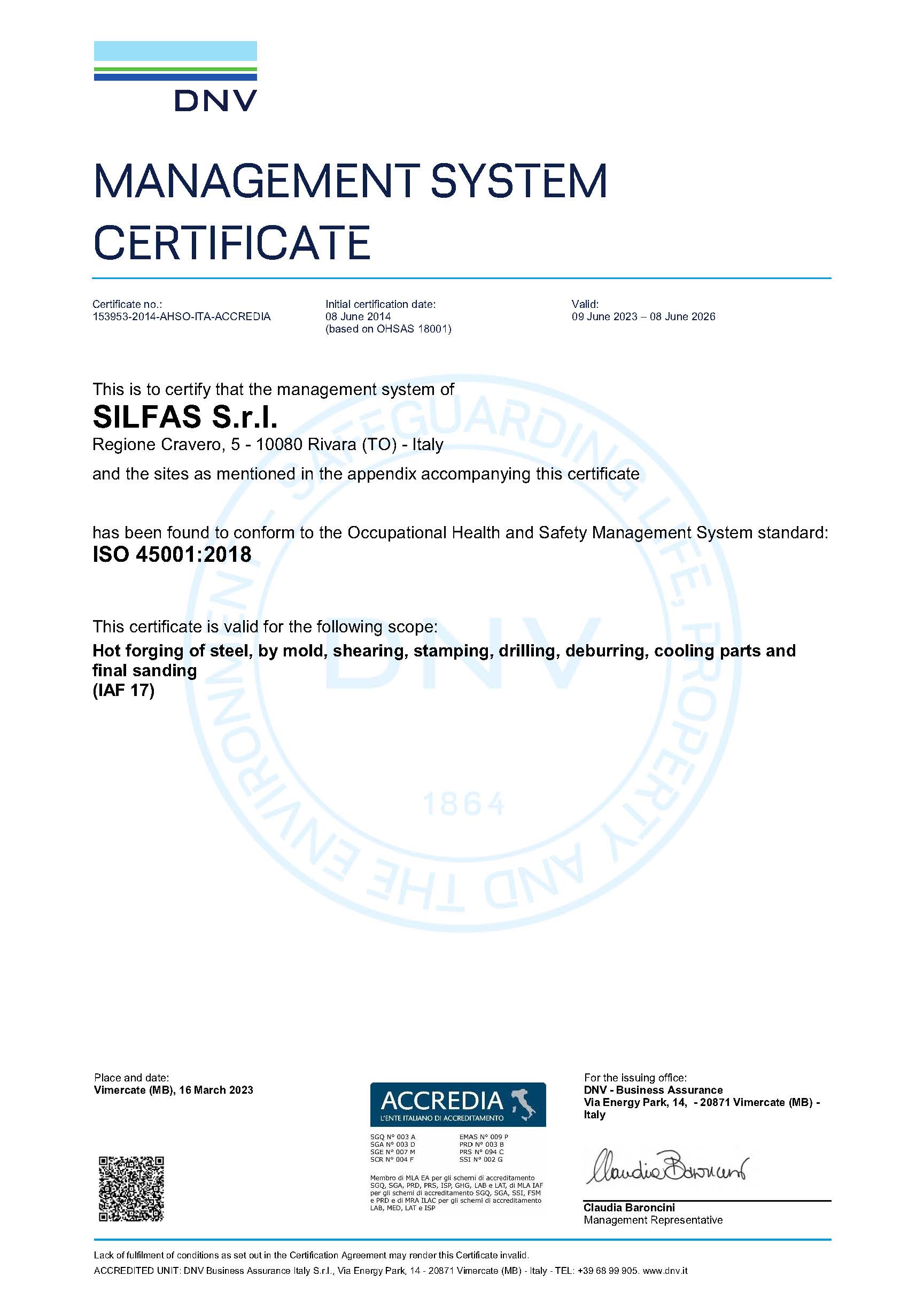
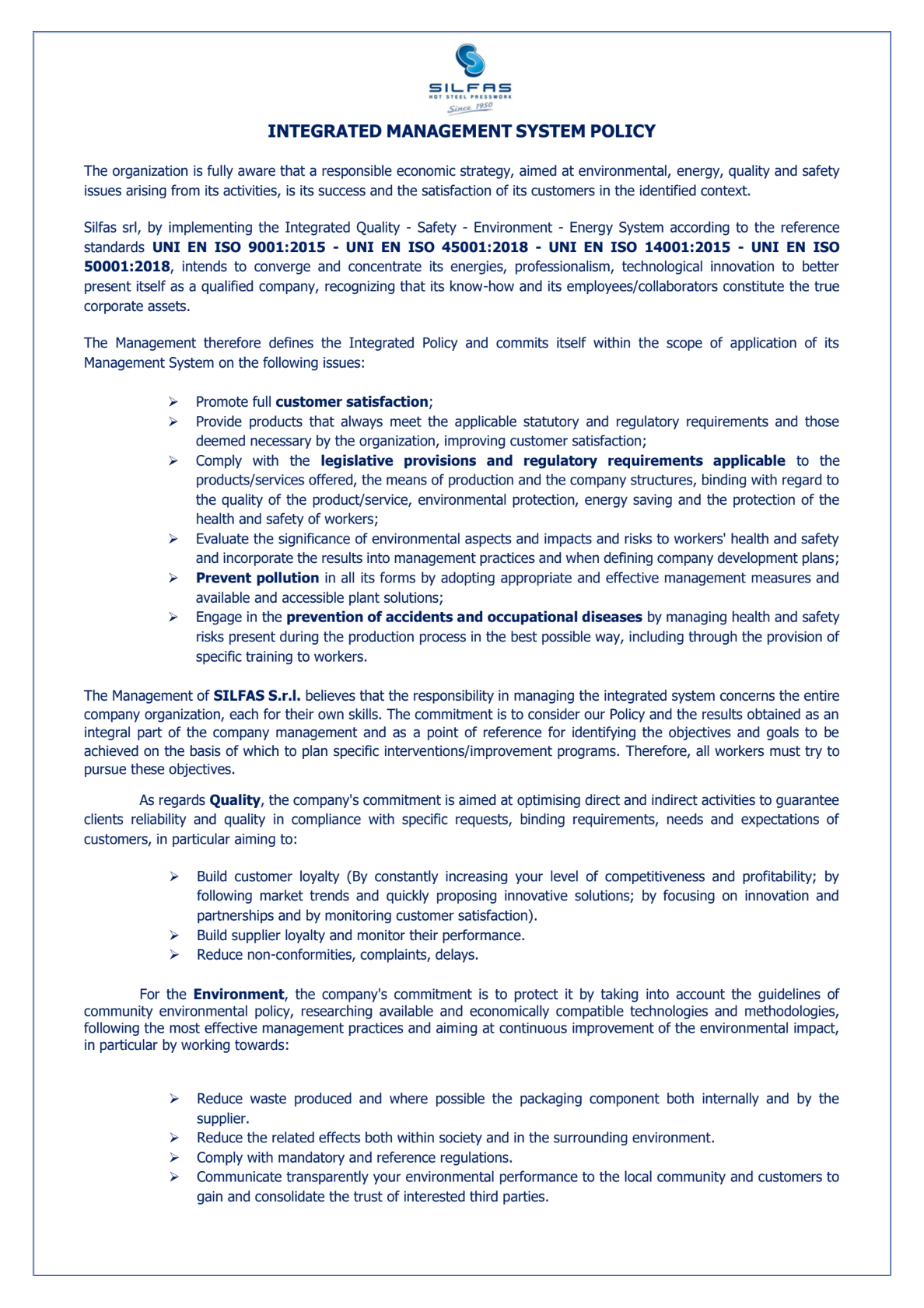
SILFAS' updated certifications are listed below. Click on the images to enlarge the certificates.